
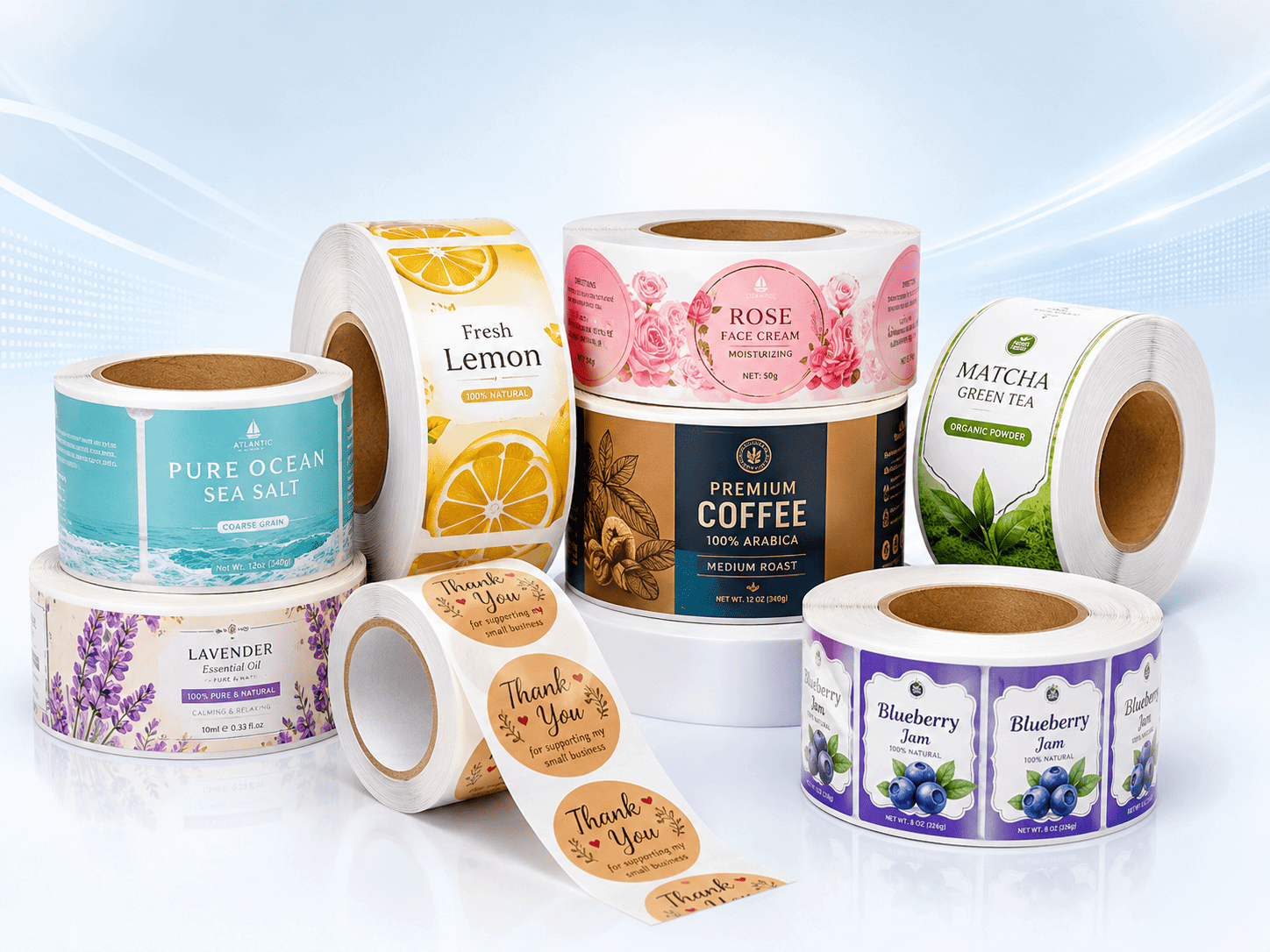
Product labels do much more than show a brand name. They help communicate product information, support shelf appeal, and must stay durable through storage, shipping, and use. Choosing the right label material is therefore an important part of packaging development.
In this guide, we explain the main factors to consider when selecting label materials for your products.
1. Start with the packaging surface
The first step is to understand what surface the label will be applied to. Different containers require different label performance.
Common surfaces include:
- Glass bottles
- Plastic jars
- Metal tins
- Paperboard cartons
- Flexible pouches
Some surfaces are smooth and easy to label, while others are curved, textured, or exposed to moisture. The label material and adhesive must match the packaging format.
2. Consider the product environment
A label that works well in dry retail conditions may fail in cold, wet, or oily environments.
Ask these questions:
- Will the product be refrigerated or frozen?
- Will it be exposed to water or condensation?
- Will it be used in kitchens, bathrooms, or outdoors?
- Does it need resistance to oil, friction, or chemicals?
For example, beverage bottles and skincare packaging often need materials that can handle moisture and frequent handling.
3. Compare paper and film materials
In general, label materials fall into two broad categories: paper and film.
Paper labels
Paper labels are a popular choice for many retail products because they are cost-effective and easy to print. They work well for:
- Dry products
- Box packaging
- Short-term promotions
- Brands looking for a natural or classic appearance
However, paper labels are usually less resistant to water, tearing, and abrasion.
Film labels
Film materials such as PP or PE are more durable. They are often used for:
- Bottles and jars
- Personal care products
- Household items
- Products exposed to moisture
Film labels offer better resistance to water and handling, and they can create a more premium or modern appearance.
4. Think about brand image and finish
The label material also affects how the final product looks on shelf.
Common finish options include:
- Matte
- Gloss
- Transparent
- Textured
- Metallic effects
A minimalist cosmetic brand may prefer a soft matte film label, while a food brand may choose a bright gloss finish to improve shelf visibility. If you want a premium tactile effect, textured materials may be worth considering.
5. Check printing requirements
Your artwork and design complexity will also influence material selection.
Important considerations include:
- Color richness
- Small text legibility
- Barcode scanning
- White ink requirements
- Special finishes like foil or embossing
Some materials display color differently, so it is always helpful to test print samples before final production.
6. Choose the right adhesive
The label material is only part of the solution. Adhesive performance is equally important.
The right adhesive depends on:
- Surface type
- Storage temperature
- Application conditions
- Removal or permanence needs
For example, removable labels are useful in some promotional or temporary applications, while permanent adhesives are needed for long-term product identification.
7. Test before mass production
Even if a material looks perfect on paper, testing is essential.
Before placing a full order, request samples and test:
- Application on actual packaging
- Performance in storage conditions
- Durability during shipping
- Appearance after handling
This helps reduce risk and prevents expensive mistakes later.
Final thoughts
The right label material improves both product performance and brand presentation. A good choice depends on packaging surface, environment, print needs, finish, and adhesive compatibility.
If you are developing new packaging or updating existing labels, it is best to review both technical requirements and visual goals before moving into production.