
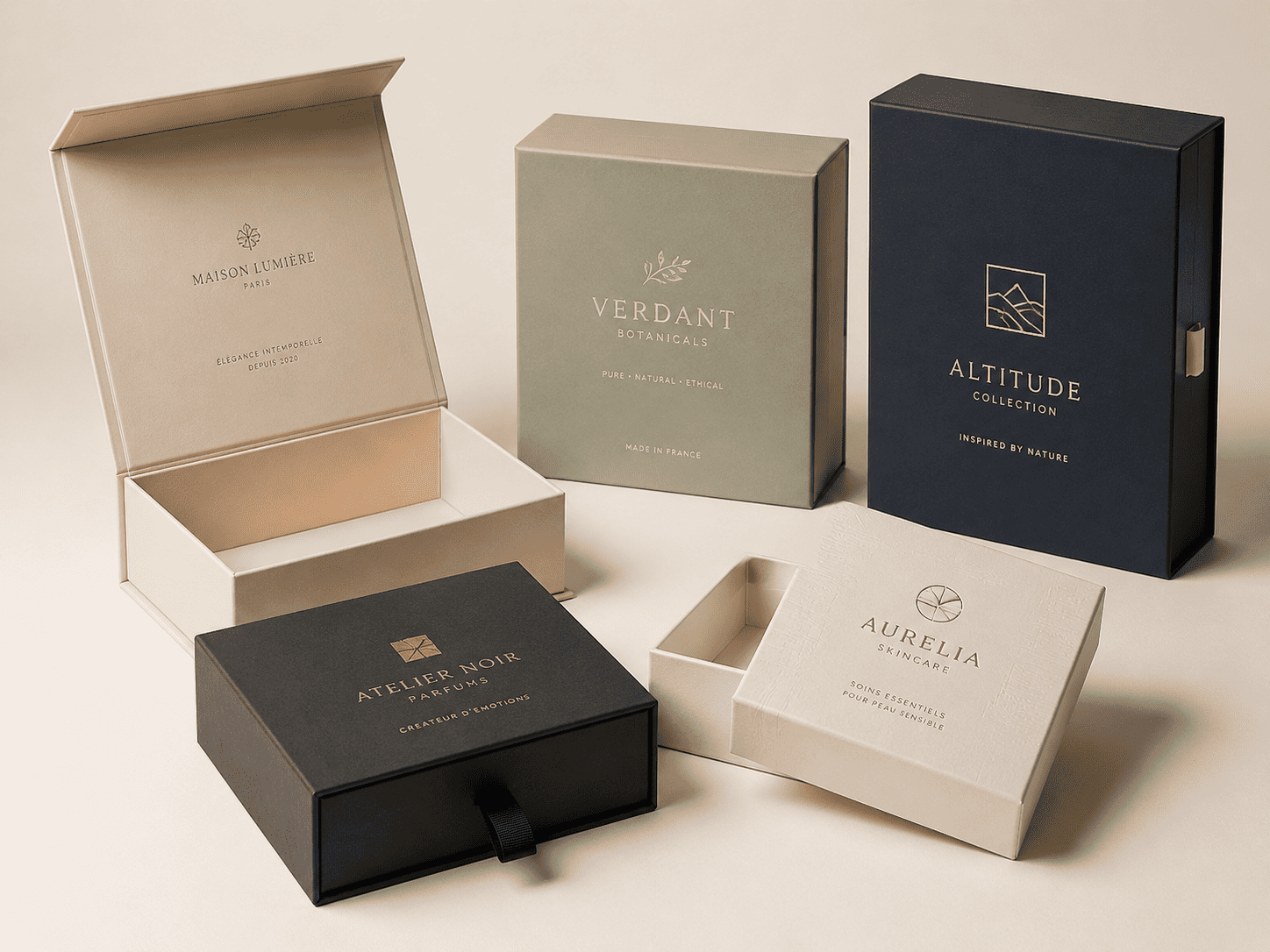
When brands want to upgrade product presentation, two common options are rigid boxes and folding cartons. Both can look attractive and support custom printing, but they serve different packaging goals.
If you are deciding between the two, this guide will help you compare them from a practical business and branding perspective.
1. What is a rigid box?
A rigid box is made from thick paperboard that does not fold flat like standard cartons. It is known for its sturdy structure and premium feel.
Rigid boxes are commonly used for:
- Gift packaging
- Luxury cosmetics
- Electronics
- Jewelry
- Premium accessories
Because of their strong construction, they create a high-end unboxing experience and help increase perceived value.
2. What is a folding carton?
A folding carton is usually made from thinner paperboard and shipped flat before assembly. It is widely used across retail packaging because it is efficient, versatile, and more cost-effective.
Folding cartons are common for:
- Skincare products
- Food packaging
- Pharmaceutical packaging
- Consumer goods
- Subscription products
They can still look premium with strong printing, coatings, and finishing, but their structure is lighter than rigid boxes.
3. Main differences in structure
The most obvious difference is strength and thickness.
Rigid boxes
- Strong and durable
- Keep their shape well
- Better for presentation and protection
- Usually pre-assembled
Folding cartons
- Lightweight
- Fold flat for shipping
- More flexible in production
- Easier to store in volume
If protection and luxury feel are the top priorities, rigid boxes often perform better. If space-saving and scalability matter more, folding cartons are usually the practical choice.
4. Cost considerations
Rigid boxes normally cost more than folding cartons because:
- They use thicker materials
- Production is more labor-intensive
- Shipping volume is higher
- Assembly is often more complex
Folding cartons are usually better suited for larger-volume runs and cost-sensitive projects.
For many brands, the right decision comes down to balancing packaging experience with unit economics.
5. Branding and shelf impact
Both packaging types can support custom branding, but the visual effect is different.
Rigid boxes are ideal for:
- Luxury positioning
- Gift sets
- High-end launches
- Memorable unboxing
Folding cartons are ideal for:
- Retail-ready packaging
- Fast-moving products
- Clean, informative design
- Efficient large-scale branding
If the packaging itself is part of the product experience, rigid boxes may justify the extra cost. If the focus is commercial efficiency with strong design, folding cartons are often enough.
6. Shipping and logistics
Logistics should not be ignored during packaging selection.
Rigid boxes:
- Take more storage space
- Cost more to ship
- Work well for premium SKUs or gift lines
Folding cartons:
- Ship flat
- Save warehouse space
- Support easier bulk handling
For brands managing large order quantities, folding cartons can offer important operational advantages.
7. Which option is right for your brand?
Choose rigid boxes if you need:
- Premium appearance
- Stronger structure
- Gift-worthy presentation
- Better perceived value
Choose folding cartons if you need:
- Lower packaging cost
- Better storage efficiency
- Scalable retail packaging
- Good branding with simpler structure
Final thoughts
Rigid boxes and folding cartons are both valuable packaging solutions, but they solve different problems. Rigid boxes are better for luxury presentation and stronger structure, while folding cartons are better for efficiency, flexibility, and cost control.
The best choice depends on your product positioning, budget, shipping model, and customer experience goals.