
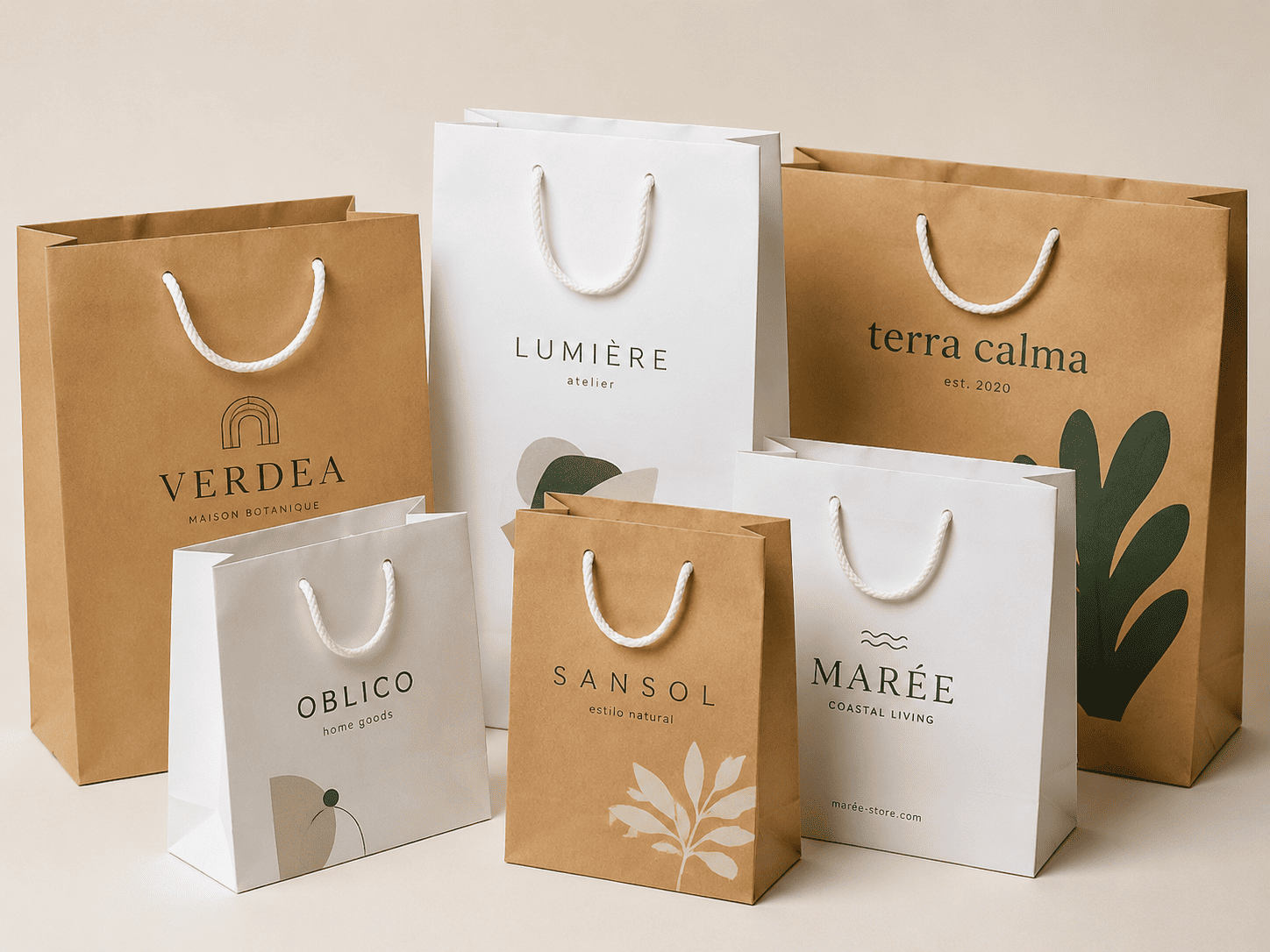
Custom paper bags are widely used in retail, gifting, food service, and promotional packaging. For buyers, the challenge is not only choosing a nice design, but also understanding how sourcing works in practice.
This guide covers the basics of paper bag sourcing, including MOQ, sampling, lead time, and key checkpoints before production.
1. Define your bag requirements clearly
Before requesting a quotation, prepare the main specifications.
Important details include:
- Bag size
- Paper type
- Paper thickness
- Handle type
- Printing colors
- Finish requirements
- Estimated order quantity
Without clear specifications, prices can vary widely and supplier comparisons become difficult.
2. Understand MOQ
MOQ means minimum order quantity. It is one of the first points buyers should confirm.
MOQ for paper bags depends on factors such as:
- Size
- Material
- Printing complexity
- Handle construction
- Production method
A simple paper bag with standard options may support a lower MOQ, while a fully customized luxury bag usually requires a higher minimum order.
If your order volume is still uncertain, ask the supplier whether there are standard sizes or simplified options that reduce the MOQ.
3. Why sampling matters
Sampling helps buyers confirm both appearance and structure before mass production.
There are usually different types of samples:
- Digital mockups
- Plain structural samples
- Pre-production printed samples
A structural sample helps you check size, folding, and handle strength. A printed sample helps verify color, logo placement, and overall finish.
Sampling is especially important if:
- You are launching a new product
- The bag includes premium finishes
- The bag must fit a specific item
- Brand color accuracy is important
4. Check lead time early
Lead time is not just production time. It often includes several stages:
- Artwork confirmation
- Sampling
- Material preparation
- Production
- Quality inspection
- Shipping
That means a project can take longer than expected if planning starts too late.
When discussing lead time, ask separately about:
- Sample lead time
- Mass production lead time
- Shipping time
This is especially important for seasonal promotions, events, and retail launch schedules.
5. Review material and construction quality
A paper bag may look good in pictures but still fail in actual use if the construction is weak.
Check the following:
- Paper strength
- Bottom reinforcement
- Handle attachment
- Glue quality
- Print consistency
If the bag will carry heavier items, load-bearing performance should be tested before final approval.
6. Clarify printing and finishing details
Paper bags can be customized with many finishing techniques, such as:
- Matte lamination
- Gloss lamination
- Hot foil stamping
- Spot UV
- Embossing
- Debossing
These options affect both appearance and cost. If you want a premium result, confirm which finishes are actually necessary and which are optional.
Overcomplicating the design may increase cost without improving user experience.
7. Ask the right supplier questions
Before placing an order, buyers should confirm:
- What is the MOQ?
- What sample options are available?
- What is the production lead time?
- What files are needed for printing?
- Can the supplier match brand colors?
- How are products packed for shipment?
- What quality checks are performed?
Good sourcing decisions usually come from clear communication, not just low prices.
Final thoughts
Sourcing custom paper bags successfully requires balancing design, cost, timeline, and quality. Buyers should start with clear specifications, request samples, confirm MOQ and lead time, and review construction details carefully.
A well-managed sourcing process reduces risk and helps ensure the final packaging supports both practical use and brand image.